
Posts Tagged ‘management’

Stop aux incivilités et impolitesses au travail!

May 5, 2025

Selon des recherches menées par Christine Porath, Professeur en Management à Georgetown University et de Christine Pearson, Professeur en Global Leadership à Thunderbird, Arizona, plus de 50% des salariés interrogés estiment ne pas être respectés par leurs employeurs et ont déclaré avoir été victimes d’incivilités au moins une fois par semaine sur leur lieu de travail. Ces incivilités au travail englobent un éventail de comportements inappropriés qui, bien que non violents, créent un environnement de travail hostile. Elles incluent les remarques désobligeantes ou insultantes, des commérages, des blagues de mauvais goût, ne pas dire bonjour aux autres, passer son temps à faire des critiques non constructives, couper la parole, adopter un mauvais comportement en général, ne pas répondre aux appels ou emails dans des délais raisonnables, arriver systématiquement en retard pour les rendez-vous ou réunions,…. 

Ces résultats ne sont pas étonnants. On a tous l’impression que les incivilités et impolitesses petites et grandes augmentent à la fois au travail et dans la société en générale. Dans un environnement professionnel, ces incivilités et impolitesses prennent différentes formes et peuvent être commises par des managers, des subordonnées ou par des collègues.

Au travail, on a peut-être connu ou croisé un hiérarchique autoritaire, voire tyrannique qui harcèle ses collaborateurs, les insulte, ne reconnaît jamais les efforts fournis, voire dévalorise le travail fait, qui accuse les autres de ses propres torts, qui prend le crédit pour le travail fait par les autres, qui n’hésite pas à critiquer ou émettre des remarques désobligeantes devant d’autres, qui interrompt sans cesse, qui hausse le ton ou qui s’énerve quand il/elle n’a pas ce qu’il/elle attend, qui pense tout savoir et fait à la place des autres, ne reconnaissant jamais le périmètre des autres.

Ou encore un collègue ou subordonné qui ne dit jamais bonjour, qui ignore ses collègues, qui répond jamais aux emails, arrive systématiquement en retard, qui coupe la parole des autres, qui écrit ses emails ou consulte sans cesse son smart phone en réunion, qui n’hésite pas à critiquer les autres devant la machine à café, voire passe son temps à répandre des commérages et rumeurs autour de lui sur des collègues, son manager, la Direction, qui prend les autres de haut, qui ne dit jamais merci,…

Ces incivilités et impolitesses sont souvent des irritants qui pris isolement ne sont pas graves en soi mais qui peuvent avoir des conséquences importantes quand ils sont répétés et/ou deviennent la norme au sein d’une équipe.

Ces incivilités et impolitesses ont certainement un impact important selon les salariés interrogés par Porath et Pearson. En effet, face à de tels comportements:

  1. 48% des salariés interrogés ont admis avoir délibérément réduit leur investissement au travail
  2. 47% ont réduit leur temps passé au travail
  3. 38% ont délibérément réduit la qualité de leur travail
  4. 80% ont perdu du temps de travail en s’inquiétant des conséquences de ces incivilités à leur égard
  5. 63% ont perdu du temps de travail en évitant les auteurs de ces incivilités
  6. 66% ont estimé que leur performance au travail a été dégradée
  7. 78% ont estimé que leur engagement envers l’organisation a été érodé
  8. 12% ont affirmé qu’ils ont quitté l’entreprise à cause de ces incivilités
  9. 25% ont admis évacuer leurs frustrations sur les clients

Parmi les conséquences de ces comportements inciviles:

  • La créativité des salariés en prend un coup

Les recherches de Porath et Pearson suggèrent que les salariés traités d’une manière incivile ou discourtoise ont tendance à être moins créatifs que les salariés traités avec respect. Ils produisent moins d’idées et ces idées étaient moins originales. Les salariés ou équipes exposées à l’impolitesse, que ce soit de la part des collègues, des superviseurs ou de clients, ont montré une réduction du partage des informations et du partage de la charge de travail, deux éléments essentiels à la performance d’une équipe.

  • La performance et l’esprit d’équipe sont dégradés à la fois pour les victimes et pour les témoins.

Ce n’est peut-être pas étonnant que la performance et l’esprit d’équipe des victimes de ces comportements en soient impactés. Mais les mêmes études montrent que ces impolitesses ont un effet négatif non seulement sur les salariés directement visés mais également sur les salariés témoins de ces comportements, même si ceux-ci ne sont pas directement ciblés. Non seulement les témoins de ces comportements faisaient preuve de moins de créativité et étaient moins productifs mais ils étaient également moins disposés à aider les autres, même quand le salarié à aider n’avait aucun lien hiérarchique avec le salarié auteur du comportement incivile ou avec le salarié victime. Ces comportements hostiles contribuent donc à la démotivation et au désengagement des salariés, à la mauvaise coopération, à la mauvaise qualité, au “quiet quitting” et au taux de démissions des salariés.

  • Les clients rejettent les cultures d’entreprises “inciviles”.

Les comportements inciviles ont un impact négatif sur les clients. Nous sommes tous allergiques au manque de respect et les salariés victimes de comportements inciviles risquent d’adopter ces mêmes comportements inciviles dans leurs relations avec les clients. Pire, les études montrent que les clients témoins de ces comportements (par exemple un responsable qui critique un collaborateur devant un client ou un salarié qui critique un collègue au même client) préfèrent aller ailleurs que de cautionner un comportement qui dégrade un interlocuteur chez son fournisseur.

  • Gérer les incidents résultant de ces comportements inciviles prend beaucoup de temps

Tout responsable RH et/ou manager sait que gérer les conséquences de ces incidents prendre beaucoup trop de temps qui aurait pu être mieux utilisé sur des sujets plus critiques pour l’entreprise. Porath et Pearson font référence à une de leurs études qui indique que les managers au sein des sociétés Fortune 1000 passent 13% de leur temps de travail à gérer les conséquences de ces comportements.

Que peut faire un Leader face à la montée de ces incivilités toxiques?

  1. Donner l’exemple

Tout escalier se balaie par le haut. Les leaders donnent le ton et tout manager doit d’abord être conscient de son comportement et de l’impact de son comportement sur les autres. Selon Porath et Pearson, 25% des managers qui ont admis s’être mal comportés envers des collaborateurs ont affirmé qu’ils avaient pris l’exemple sur leurs N+1!
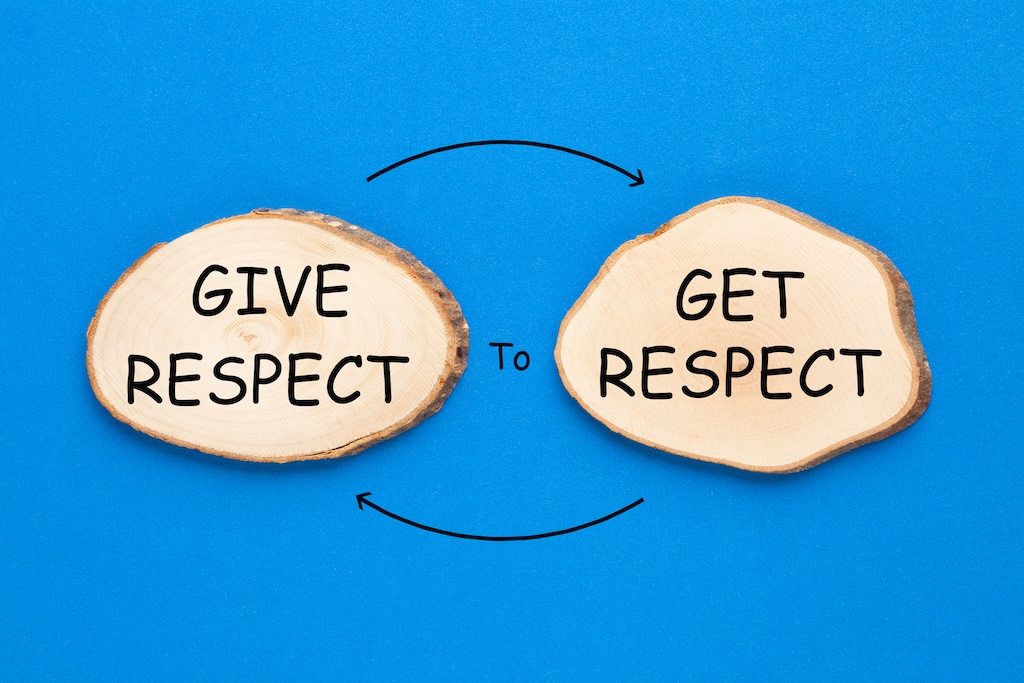
On a les comportements que l’on rémunère. Si une organisation non seulement tolère des comportements inciviles chez un manager mais valide ce comportement en promouvant ce manager au sein de l’organisation, on donne un signal clair à tous sur les comportements à adopter pour réussir au sein de l’organisation. Pour réduire, voire éliminer ces comportements inciviles, le leader doit donc donner l’exemple et la Direction doit valoriser les bons comportements et pénaliser les incivilités. Difficile de demander aux autres de couper leur portable en réunion si le leader ne le fait pas. Difficile de demander à un chef d’équipe de reconnaître ou saluer la performance de ses collaborateurs si sa hiérarchie ne le fait pas vis à-vis de lui. Difficile de demander à un collaborateur de ne pas couper la parole de ses collègues en réunion si sa hiérarchie lui fait subir le même traitement

2. Demander du feedback à ses collaborateurs

Les perceptions sont plus importantes que les intentions et il ne faut pas hésiter à solliciter les avis de ses collaborateurs si un leader veut ajuster son comportement tout en donnant l’exemple. Porath et Pearson suggèrent aux managers de tenir un journal avec des exemples de comportements inciviles au sein de leurs équipes et de noter les actions correctives à prendre.

3. Suivre son progrès et celui de son équipe.

On ne manage pas ce que l’on ne mesure pas et il est important de suivre son progrès dans le temps. Si on ne se donne pas des objectifs pour réduire, voir éliminer les incivilités au sein de son organisation, si on ne prend pas des actions pour atteindre ces objectifs et si n ne mesure pas les résultats, il est certain que rien ne se passera, les incivilités continueront à se propager et les conflits interpersonnels se proliférant.

4. Prendre des mesures au niveau de l’organisation

Il ne suffit pas de prendre des mesures au niveau individuel. Il faut aussi prendre des actions au niveau de l’organisation dans son ensemble.

  • Faire de la civilité un critère de recrutement

Il va de soi que mieux vaut prévenir que guérir et autant que possible, éviter de recruter des collaborateurs qui ont un potentiel de comportement incivile. Impliquer l’équipe dans le recrutement pour leur permettre d’évaluer leur futurs collègues. Utiliser les tests d’évaluation qui permettent d’évaluer l’intelligence émotionnelle et les capacités d’intégration des futurs candidats. Aborder le sujet des comportements inciviles en entretien d’embauche avec les candidats pour mesurer leurs réponses. Porter attention à la ponctualité des candidats, leur façon de s’exprimer, les propositions qu’ils proposent pour résoudre des potentiels conflits au travail. Demander des références aux candidats surtout pour des postes d’encadrement.

  • Former les managers à l’importance de l’empathie et de l’intelligence émotionnelle

Selon Porath et Pearson, étonnamment, certains managers et salariés interrogés ne savent pas faire la différence entre des comportements civiles et inciviles. 25% des salariés sondés n’ont pas reconnu certains comportements comme étant inciviles ni les impacts négatifs sur leurs interlocuteurs. Il est donc important de définir ce que l’on attend de chacun en termes de comportements civiles au travail. La civilité pour être apprise, l’intelligence émotionnelle et l’empathie peuvent être réveillées et/ou développées pour créer une culture de travail positif: Dire bonjour et au revoir, sourire, pratiquer une politique portes ouvertes, aborder les sujets difficiles avec les collègues directement au lieu d’échanger des emails, éviter les propos critiques incendiaires visant la personne, louer en public et critiquer en privé quand on est manager, donner du feedback constructif qui ne met pas en question la personne mais focalise sur le comportement à améliorer, rassurer le collaborateur, ne pas couper la parole, laisser les autres s’exprimer avant de s’exprimer, reformuler pour vérifier que l’on a bien compris, arrêter d’écrire ses emails en réunion, respecter les agendas des uns et des autres, arriver heure, répondre aux emails et appels, la liste est longue de comportements simples à adopter et à systématiser pour rendre l’environnement de travail plus positif et productif.

  • Mettre en place un code éthique

Au lieu d’imposer des règles sur ses collaborateurs, lancer une discussion au sein de l’équipe sur les bons comportements civiles à adopter et les mauvais comportements à écarter. Généraliser le débat au sein de l’organisation pour créer et maintenir une culture organisationnelle de la civilité et de la politesse. Rédiger ensuite une charte de bonne conduite qui résume les bons comportements à encourager et les mauvais comportements à éviter avec des exemples concrets. Intégrer ce code dans le processus d’intégration des nouveaux salariés et dans les revues annuelles.

  • Récompenser les bons comportements

Finalement, il faut évaluer non seulement la performance individuelle mais également la performance collective lors de la revue annuelle qui doit clairement permettre aux managers d’évaluer les comportements civiles attendus au travail. Souvent comme rappelle Porath et Pearson, les revues annuelles insistent plus sur les livrables business au détriment de l’impact du collaborateur sur le collectif. Atteindre ses objectifs individuels au détriment de ses collègues et/ou de l’équipe érode la performance collective à moyen terme.

  • Pénaliser les mauvais comportements

Evidemment, il faut aussi pénaliser les mauvais comportements. Trop souvent, les entreprises laissent passer les incidents et comportements inciviles de certains collaborateurs, voire récompensent ces managers pour leurs performances techniques en ignorant le mauvais comportement de ces collaborateurs envers leurs collègues et/ou équipes.

Il faut donc permettre aux salariés de remonter en interne des comportements inciviles dont ils s’estiment victimes, traiter chaque plainte sérieusement et donner un retour au salarié concerné sur les actions prises. Il faut surtout agir rapidement. Porath et Pearson cite un directeur qui reconnaît que les erreurs commis concernent des actions prises trop tardivement pour traiter ces situations et non pour avoir agi trop tôt.

Trop souvent, les entreprises sont focalisées sur les résultats financiers ou commerciaux et insister sur une culture de civilité semble être un luxe, voire extravagant. Il suffit néanmoins d’un seul manager ou collaborateur positionné à un niveau stratégique au sein de l’organisation pour que ses incivilités occasionnent des coûts importants pour la société en termes de turnover, de clients perdus et de productivité dégradée.

Pour conclure, au lieu d’être des irritants mineurs, les incivilités et impolitesses au travail impactent la performance des équipes et génèrent des conséquences importantes pour l’entreprise et pour ses salariés: stress, mauvaise qualité et erreurs, retards, insatisfaction des clients, démotivation, désengagement, quiet quitting, démissions. Parfois les conséquences peuvent être graves. D’autres chercheurs à l’Université de Floride, USA, ont découvert que l’impact de ces incivilités est disproportionné à son intensité et que même des comportements inciviles mineurs peuvent générer des conséquences beaucoup plus importantes et notamment au sein d’équipes médicales où la coopération, la solidarité et le partage des informations dans la délivrance de soins critiques sont primordiales. Il ne faut donc pas traiter les incivilités au travail comme mineures ou marginales mais les traiter comme des agents toxiques à combattre, comme on combattrait un virus.

Pour aller plus loin:

https://www.francetvinfo.fr/replay-radio/le-billet-vert/pour-plus-d-efficacite-collective-au-travail-soyez-polis-avec-vos-collegues_6676776.html

Découvrez Christine Porath sur Ted Talks.

Driving higher engagement – 6 rules for Smart simplicity

January 26, 2014

“Things should be made as simple as possible, but not any simpler”. Albert Einstein

Why is productivity in some organizations so disappointing? Despite all the innovations in technology and all the investment in training and developing employees and managers to adapt to more and more complex organizations, why does it appear (and statistics would seem to bear this out) that a significant number of workers are disengaged from their jobs and feel unhappy at work?

In his insightful presentation, Yves Morieux gives his views on the main drivers of employee disengagement. More than that, he offers 6 simple rules for driving employee engagement and higher productivity.

For Morieux, traditional approaches on how to engage employees to be more productive have up to now focused on two main management pillars:

  • the “Hard” pillar which seeks to improve productivity by working on structures, processes, systems, statistics, KPIs,…
  • the “Soft” pillar which seeks to work on the interpersonal communication and personal relationships, the traits and personalities of the individuals in order to help them adapt their personalities to the constraints of the organization

Many companies spend large amounts of money on reengineering their structures, processes and systems in order try to drive higher productivity and engagement and/or on training their managers and employees to adapt to these new structures, processes, systems.

But for Morieux, these two pillars of management are obsolete and are even counterproductive. Why?

All organizations are becoming more and more complex and by trying to improve engagement using one or both of these two traditional management pillars (work the structure and train the people to adapt), they in fact only add on more complexity.  Rather, they add on layers of “complicatedness” to an already complex environment.

For example, in the car industry, a drive to reduce repair time led to the creation of a specific “repairability” requirement which in turn led to the creation of a specific “repairability” function, the role of which was to align design engineers to repairability objectives. This inevitably led to the creation of a specific “repairability process“, a “repairability scorecard” and “repairability KPIs “to measure engineering  alignment to process objectives. But when one considers that there were 25 other competing functions each with its own process, scorecard and KPIs, very quickly one realizes how complicated it was for the engineers concerned to comply meaningfully with so many competing constraints and requirements and for “Mr Reliability” to impact positively on the “repairability” issue in a meaningful way.

The inevitable result is that rather than improving productivity, such a traditional approach only complicates things by adding extra layers of administration, back office work and non added value tasks. Costs are higher for zero results.

The secret for Morieux lies in not drawing additional boxes with complicated reporting lines or adding on extra organizational layers. It lies, as he says, in understanding the “interplay“, the connections and cooperation required between functions to deliver the required result. In simple terms, what is key is how the parts “cooperate” or should “cooperate“. As Morieux points out, “every time people cooperate, they use less resources and not more“.

Conversely, when functions don’t cooperate, they always need “more time, more systems, more processes, more teams….which means higher costs. 

But who pays for this?

Not the shareholders. Not the customers. Individual employees must eventually pay by overcompensating for the lack of functional cooperation  through higher effort and this inevitably leads to burn out, stress, disenchantment and disengagement.

Faced with such productivity problems, the “Hard” management pillar seeks to add on extra boxes to the “organizational skeleton”. The “Soft” pillar believes that if functions  like one another and fit better together, this will solve the problem. But in fact, the result is often the opposite because to maintain the relationship, functions will seek to add on extra organizational layers expecting these extra layers to resolve the conflicts or deliver the tough trade offs required which they don’t want to address themselves  for fear of endangering relationships.

These two approaches are therefore obsolete in a complex organization because they only generate unnecessary complicatedness and Morieux offers instead 6 key rules for smart simplicity :

Rule 1: understand what people really do.

We need to go beyond the job descriptions and the organization charts and understand what others really do operationally so that we know how different functions depend on and interact with one another. The designer should understand the consequences of his design for the customer services team and for the repair teams before he commits a design and generates costs further down the line.

Rule 2: we need to reinforce the role and powers of the  integrators.

Integrators are not middle offices but managers who must  “have an interest in and be empowered to make others cooperate“. How do you empower managers? Firstly, by removing unnecessary organizational layers. When you have too many management layers, you have more and more managers who are  “too far removed from the action” and who need “KPIs and score cards” to see reality.  What they see is not reality but a proxy of reality. Secondly,  you also need to simplify the management rules because the bigger and more complex an organization becomes, the more you must give discretionary power to managers to solve their problems at their level. Quite often, we do the contrary and we end up by creating huge systems of rules which freezes initiative and drains local managers of responsibility. That doesn’t mean that there shouldn’t be rules but it is vital to ensure that the rule book is lean and that managers can act effectively and quickly.

Rule 3: Increase the quantity of power to everyone

If you want more employees to take initiatives and “engage” more with the organization, you must give more power to everyone so that they feel they can use their initiative and intelligence to good effect and that they have all the cards in their hands to make a difference. Only then will they be ready to take risks and really seek to cooperate meaningfully with others.

Rule 4: Create a shadow of the future

You must expose employees to the consequences of their actions by constantly creating feedback loops, thereby creating a shadow of the future.  This is what the car industry did when they told  design engineers that they would move to the after sales service three years on so that they would have to live with the consequences of their own designs. If you empower more people, you must also ensure that these empowered people get effective feedback on their actions so that they are constantly  adapting their behaviors to organizational expectations and can clearly link their actions and organizational results.

 Rule 5: Increase reciprocity

This means “removing the buffers that make functions self-sufficient”. There is too much dysfunctional self sufficiency in organizations, largely fed by increased organizational layers and sub layers. Remove these unnecessary layers and interfaces which interfere with meaningful cooperation and we will encourage greater productivity. Above all, seek to design your organization in a way that creates interdependencies between functions so that only cooperation can deliver the required result.

Rule 6: Reward those who cooperate, blame those who don’t cooperate

Rather than promoting a culture that blames failure, we should promote a culture that rewards cooperation and blames non-cooperation. Morieux cites the CEO of Lego who believes  that “blame is not for failure, blame is for not helping or not asking for help“. This indeed changes everything because it encourages us to be transparent and to cooperate.

These 6 rules have profound consequences for organizational design, for finance policies, for human resource management in complex organizations. Above all, if we implement these 6 simple rules, we will manage complexity without being paralyzed by complicatedness. We will create more value at lower cost. We will simultaneously improve performance and job satisfaction because we will have removed the root cause that hinders both : “complicatedness“. This is the real challenge facing all leaders of complex organizations.

Why some succeed where others fail. Start with “Why” and not “What” or “How”!

November 5, 2013

Why do some succeed where others fail?
Why are some organizations so successful where other organizations fail ? Why for example is Apple so innovative year after year after year whereas other computer manufacturers such as Dell or Gateway have failed in various initiatives to diversify?

Why should customers buy your products or services in a market place where your competitors have the same access to talent, the same agencies, the same marketing tools, the same market conditions, the same resources, the same technical expertise? What makes you different?

Start with “Why” and not with “What” or “How”
Simon Sinek, author of “Start with Why: how great leaders inspire everyone to take action” answers these questions in a very clear and simple way. The reason why some organizations succeed where others fail is for one simple reason: those who succeed are those who think, act and communicate in a totally different way and follow what Sinek calls the principles of the Golden Circle. Successful and inspirational leaders start by defining “why” they do what they do before explaining what or how they do it.  In other words, they define their purpose clearly and act and communicate aligned to that purpose. They communicate from the “Inside out”.

The Golden Circle

Communicate from the “Inside-Out”
Most organizations communicate from the “Outside-In”: they describe what they do, how they do it and then expect or hope customers to make a decision based on the facts presented. In fact, many organizations proceed this way because they don’t know “Why” they are doing what they are doing.

But this “Outside-In” approach as Sinek point out is very uninspiring and doesn’t capture the minds and hearts of the largest audience and certain doesn’t set us apart from the rest. Indeed, if you don’t know “Why” you are doing what you are doing, how can you hope to inspire others to buy your products or follow your lead?

Rather provocatively and counter-intuitively, the goal of business, Sinek reminds us, is not to do business with people who need what we have, the goal is to do business with people who believe what we believe.

When we communicate from the Inside Out and get others to buy in to our Purpose, we speak to the fundamental drivers of human decision making, the “emotions” and we inspire those who think the same way as we do, feel the same as we do, see the world as we do, who are ready to trust us because we share something in common more than simply a basic business need.

Apple is so innovative because it succeeds in inspiring those of us who share the same purpose and see the world as Apple sees it. Apple doesn’t first try to sell us technology or extra functionalities. Indeed, their products as a whole are perhaps no better than those of its competitors. But what they do best is sell a vision and a purpose which many customers buy in to perhaps even despite the short comings of the products themselves.

Indeed, the Golden Circle principle can be applied to all areas of human endeavor.

Hire people who share the same goals and values
From a Human Resource point of view, when seeking to build a great team, we shouldn’t simply seek to hire people who can simply do the job. As Sinek says, attracting people who want to work for the paycheck is not enough. We must seek to attract people who believe what we believe, who share and identify with the goals and values of the organization because only those who share the same goals and values will go beyond the simple actions required to earn the paycheck and will engage fully with the organization, especially when the going gets rough. How do we find those people? By talking about who we are and by communicating from the “Inside-out”, we will attract more people who share the same values as us.

The perhaps apocryphal advertisement supposedly placed by the Irish Arctic explorer, Sir Edward Shackleton in the Times newspaper illustrates how building a strong and effective team depends on much more than simply knowing how to perform the tasks required. The ad is supposed to have been published as below:

“MEN WANTED: FOR HAZARDOUS JOURNEY. SMALL WAGES, BITTER COLD, LONG MONTHS OF COMPLETE DARKNESS, CONSTANT DANGER, SAFE RETURN DOUBTFUL. HONOUR AND RECOGNITION IN CASE OF SUCCESS. SIR ERNEST SHACKLETON”

Perhaps this ad was never indeed placed but it captures what all high achieving teams really need. Going the extra mile, making the extra effort depends on much more than simple technical competencies and in Shackleton’s case, his team survived because they shared the vision, the same goal and values.

Leadership by authority versus Leadership by inspiration
From a leadership point of view, Sinek makes the difference between those who are in leadership positions because they have power and those who are leaders because they manage to capture the hearts and minds of their audiences. Power is not enough to inspire others and all the great leaders in history, Martin Luther King, Gandhi, JFK, Churchill (to name but a few), were effective leaders because they managed to capture the hearts and minds of their audiences through a shared vision and purpose rather than through any exercise of pure power. As Sinek so provocatively suggests, leaders inspire us to follow them for ourselves and not for them, because they personify what we believe.

Check out Simon Sinek on TedTalks for a fascinating and charismatic presentation of his views on how answering the question “Why” makes such a big, big difference.

Effective performance: it’s all about trust. 10 tips for managers to develop team trust

February 7, 2011

It is clear to many people today that we are experiencing a crisis of  trust. The recent global banking and financial crisis seems to have undermined radically the bedrock of all business success: TRUST.

All the traditional pillars of society are now more or less in question and all levels of society seem to be affected by this fundamental lack of trust. It’s not surprising that this crisis of trust has spilled over to the world of work and many internal employee surveys continue to show that employees the world over place seem to place less trust in their organizations and management to look after their best interests.

A lot of employees feel indeed they are now paying what Stephen M.R. Covey calls a hidden “trust tax”: the less trust they have in their organizations, the more they adopt counter productive behaviors to compensate, generating in turn further distrust. The excessive use of emails at work may be only one basic example of this “trust tax” because excessive email ties up unnecessary time for many people who don’t need to be necessarily on copy for everything.

And yet, never has trust been more necessary because as Stephen M.R. COVEY points out in his book  “The Speed of Trust“, nothing can be achieved long term without trust. Without trust, short-term gains may indeed  be acquired but at huge cost and after huge delays and in today’s fast evolving business environment, speed is key to business success.

Trust is therefore the fundamental driver of performance in the new global economy and indeed is “the key leadership competency” required to drive effectiveness. Especially in fast evolving, matrix, lean organizations, it’s not possible to monitor every employee and “compliance” can’t be the only management objective. Only a culture of trust delivers the behaviors businesses needed to get the results required at the cost and speed expected by customers.

For as Stephen M.R. Covey indeed points out, trust always impacts 2 key outcomes: speed and cost. When trust goes down, speed goes down and costs go up. When trust goes up, speed goes up and costs go down. In high trust environments, all the different ingredients which contribute to effective performance are encouraged: internal communication is smoother, collaboration is more effective, execution is faster thanks to quicker decision-making, innovation is greater, alignment is easier, employee engagement in increased, partnering and relationships with all stakeholders are more positive.

In low trust environments, of course, all of these ingredients are impacted and impaired. Communication becomes difficult at all levels as employees may hide information, collaboration within teams becomes more complicated, execution becomes cumbersome as decision making involves more and more people, the source of innovation dries up, there is misalignement between strategy and individual actions, employees become more disengaged and relationships with stakeholders inevitably suffer.

Trust is not some soft skill “nice to have but hard to measure“. Covey quotes a 2002 study by Watson Wyatt which shows that return to shareholders in high-trust organizations is almost three times higher than the return in low trust organizations. Trust or the lack of it impacts on the bottom line dramatically.

What’s more, managers can actually do something about it. Trust is something that can be developed and managers have a responsibility and an opportunity to build trust with their team members and with stakeholders  across the organization.

Here therefore are some tips for managers to help build trusting relationships within teams:

1) Recognize that trust is the key driver of performance and that building trust is a key management responsibility and objective. Too often, managers set themselves hard, quantifiable, task-oriented objectives but they rarely set themselves an objective of building a culture of trust. As trust is the bedrock on which everything else rests, this is very surprising, to say the least.

2) Walk the talk by setting example. Say what you do and do what you say. Meet your commitments small and big. You build credibility and trust by demonstrating that you keep your word and that you can be counted on to deliver. Team members lose faith and become demotivated when they notice a gap between the “talk” and the “walk“. Worse, they may even adopt the same behavior because as we all know, the manager’s behavior sets the tone with regard to what is/not acceptable behavior within a team. Pay attention to detail and to the small things because as we again all know, the “devil is in the detail“. Failing to meet commitments in apparently “small issues” can set the tone. Quite often, team members don’t see the big things but notice the “small details“.

3) Empower team members. Empowerment means giving each person a meaningful role aligned to his/her competencies where he/she feels he/she has “stewardship” for the job. In other words, each person feels responsible for getting the job done and for evaluating results. This doesn’t mean the manager exerts no control because there can be no delegation of responsibility without control. What it does however mean is that employees are given the chance to feel they have a form of “ownership” for their objectives and have accountability for results. As we all know, we all respond more favourably to being trusted and we are more motivated to get things done when it becomes a personal challenge and when we feel we are personally responsible for results.

4) Don’t delegate “tasks”. There may be times when a task needs to be completed and someone has to do it. A manager needs to delegate that task to a team member. However, delegating tasks must remain the exception rather than the rule. Managers should seek to delegate a set of responsibilities that allows a person to take responsibility and accountability  for the expected results for a given role in the team.  Being responsible for a given role obviously allows the person to be proactive and develop strategies to manage work. Being constantly asked to work urgent tasks prevents employees from being more effective. The simple matrix below illustrates  some differences between delegating tasks  and empowering through clearly defined roles.

5) Get out of the way. Once you empower your team members in an appropriate way, get out of the way and let each team member play his/her role. If something goes wrong or if things don’t progress as quickly as desired, avoid the temptation to step in and decide or act in place of the team member who has “stewardship” for the action. Unless absolutely necessary, don’t take back a responsibility granted and don’t short-circuit team members or act in their place. This only contributes to demotivating the person concerned who will feel that he/she doesn’t really have responsibility for the task at hand and that when push comes to shove, someone else will decide.

6) Align “roles and responsibilities” within the team. There can be no “empowerment” without role alignment within the team. Ensure that all team members understand their role and how it fits into and interacts with the greater whole. Too often, even when a manager defines a role with a team member, this is not shared with other team members and role confusion and conflict ensues concerning “who does what“. As organizations are not static, roles and responsibilities will evolve and the key role of the manager is to work constantly with his/her team to adapt roles and responsibilities in an appropriate and systemic way and in a win-win relationship.

7) Establish win-win relationships with team members. Quite often, some managers may see team members as simple cogs in a wheel serving the sole interests of the manager. Managers need to recognize that employees have their own agenda and own personal goals and these goals have to be understood and nurtured in true win-win relationships. If managers only see employees as instruments to help the advancement of their own careers and manage them in a “directive, hands-on” way, this will only lead to demotivation and poor performance as team members inevitably come to the conclusion that their contribution is ignored. Team members are not mere puppets to be manipulated at will. So know your team members, understand their needs and work to help them progress towards their goals in a “win-win” spirit.

8) “Recognize good performance in public, criticize weak performance in private“. Employee engagement is nurtured by recognition. Recognition can take many forms. Obviously, monetary recognition such as a pay increase or a bonus is one obvious way of recognizing performance. However, there are many other more subtle ways of recognizing good performance. One effective way is to give recognition in public in front of the team or through appropriate internal communication tools. A simple thank you  can go a long way. A contrario, never criticize in public. It impacts not only the person concerned but all team members and leads to demotivation and disengagement. If a team member needs to improve, the feedback should be given in private.

9) Consider objective setting and performance evaluation as a collaborative task with each team member. Use the annual appraisal process to reinforce the “win-win” relationship between the manager and team member. Start by allowing each team member to evaluate his/her own performance. This reinforces the feeling of personal stewartship and demonstrates that the manager trusts the employee to evaluate his/her own performance in good faith. Always give the employee appropriate time to respond to feedback, especially when the feedback is written down and/or captured in the annual appraisal. Never confront the team member with a “fait accompli”. Avoid always jumping to conclusions and hear what the employee has to say first. If one accepts that the vast majority of employees want to perform well, one should also recognize that employees are the best placed to know how they are performing.

10) Be open and transparent as a manager. Explain your intentions clearly. In complicated, fuzzy logic organizations where responsibilities are shared, it is becoming more and more important for managers to communicate clearly their intentions so that team members can understand the “why” a course of action is being taken. Too often, some managers resort to “command and control” techniques which gets things done quickly but in the long run, are counter-productive and lead to employee disengagement. Employees can’t evaluate if a manager “walks the talk” if the manager doesn’t first “talk the talk” by explaining clearly what his/her intentions are. Furthermore, hiding information or sharing information sparingly can confuse team members and disempower them by putting them in situations where decision-making is high risk or impossible. Indeed, sharing information and involving team members in decision-making will build trust and reinforce confidence. Openness inspires openness. This doesn’t mean sharing all information with everyone but it does mean ensuring that all team members have access to the information they need, no only to do their jobs better but to avoid errors resulting from decisions taken without the relevant information.

Follow these 10 tips and you will transform you “trust tax” into a “trust dividend“. You will also go a long way to building trusting win-win relationships within your team and thereby drive better performance and higer engagement in the workplace.

View Stephen M.R. Covey for more insights on the importance of trust in driving higher performance.

The speed of trust by Stephen M.R. Covey

Finding your leadership compass – 5 key principles to help you become an authentic leader

November 1, 2010

In 2008, former CEO of Medtronic and current Harvard Business School Professor, Bill George presented his thoughts on leadership and what makes a good leader to Google employees as part of the Google leadership series. Delivered 2 years ago in the early days of the most dramatic economic crisis since the great depression of 1929, the arguments Bill George presented in his speech then are even more relevant today, now that we are even clearer on the human, economic, industrial and financial consequences of a crisis brought about the reckless behavior of a few financial institutions “too big to fail”.

Bill George indeed begins by stating the obvious : the financial crisis is also a leadership crisis because it was brought about by individuals who preferred short-term, personal, gains to long-term organizational goals. For Bill George, organizations have been choosing the wrong people for positions of responsibility for too long and charisma has taken precedence over personal integrity and the desire to put collective before personal goals.

Basically, organizations have been choosing takers and not givers and examples abound of individuals who succeeded in the short-term but who put their organizations in dire circumstances in the long-term (only they weren’t there to take the blame). Given the consequences of the crisis we are now enduring, it is easy to understand why so many people may have lost all confidence in the whole idea of leadership and this crisis of confidence makes Bill George’s ideas even more relevant for anyone seeking to develop effective performance in organizations today.

For Bill George, leadership cannot be equated with the simple wielding of power or being able to command others to do one’s bidding. Leadership is about responsibility to others and to the organization and being conscious of the impact of one’s decisions on the well-being of the organization and of its members.


For Bill George, as for Peter Drucker, the old hierarchical, leader-follower, top-down, command-and-control, management model has failed and cannot work in today’s global, flexible, high tech organizations staffed by highly educated, white collar workers.  Knowledge workers do not respond to command and control management techniques and as they often know more than their bosses, refuse to be dictated to in the way blue-collar workers once were. Hungry to maintain their expertise, knowledge workers expect more opportunities and won’t wait in line patiently for promotion or new roles, preferring to move on if necessary to develop their careers and expertise.  Finally, money is no longer a key motivator and as we all spend most of our time at work, we need to find purpose and meaning in what we do at work.  If we can’t find that purpose or if leaders can’t help us find that purpose and meaning, we will become disengaged and demotivated.

So leaders today need to be attentive to 4 key drivers of performance and engagement:

1)   Alignment: as people need to find meaning and purpose in what they do, leaders need to be able to align employees in their organization around a common mission and set of values.  Team members will be more engaged if they adhere to the organization’s mission and if they can identify with the values espoused by the organization they belong to.  A clear mission is a magnet that attracts employees and allows them to work together as a team effectively. Neglect your mission statement and you run the risk of disengaging many of your employees.

2)   Empowerment: leaders are not defined by the power they wield but by how they  empower others to act effectively. In many organizations today, the people with most influence are not those with the most power. Leaders need to be able to recognize this and ensure that those with most influence and expertise are empowered to use that expertise and influence effectively. Empowerment is key to the sustainable development of all high tech organizations today because as Bill George points out, the key to sustainable development is innovation and creativity, which in turn depends on a corporate culture that frees up talent and allows employees to take measured risks to develop new and innovative products. The larger the organization however, the greater the risk of a command-and-control organization taking over as the organization struggles to maintain coherence through the application of rigid rules and procedures. The best way to counteract such a counter-productive culture is to try to segment the organization into small, flexible units that allows for more creativity and innovation.

3)   Customer service: for too long, the message from the financial sector has been that creating share-holder value is the ultimate goal of any corporation but as Bill George points out, any organization which has this as a goal is doomed to fail because the only way to provide share-holder value is by providing customer service and by providing the products and services the customer wants.  Organizations will only be ultimately successful if they meet their customers’ needs.

4)   Collaboration: the challenges facing all organizations today are complex and require unique collaborative skills within and outside the organization. No organization today is strong enough to stand alone and must be able to foster effective cross-functional team work with and effective collaboration with different organizations in the community at large.

So with these four key requirements in mind, Bill George looks at the leadership question and asserts that leadership concerns us all because each of use in our own way can make a difference, not in a history making way like Nelson Mandela, but in a very simple way at our own personal level by the way we interact with our own environment.

Bill George delivers a very personal message because when he says that we can all make a difference, he challenges us all to discover what makes us passionate and once we have made that discovery, to plot our lives aligned to that passion. Bill George urges us all to use our life to make a difference and this is what real leadership is about: making a difference. Personal values are therefore at the centre of Bill George’s views on leadership.

How can one develop such value-centered leadership and make a personal difference at our own individual  level?

Bill George defines 5 principles of value-centered leadership:

1) Know yourself and this means developing your self-awareness. Leadership does not come from the outside but from the inside, is about the person and we can all be leaders in our own way providing we know who we are, what we stand for, where we want to go, what our strengths are, what our motivations are, what positive forces driving us are. To develop our self-awareness, getting good feedback is vital: from peers, subordinates, bosses,etc…

2) Know your values and base your actions on your values. As you progress your career, you will be more and more confronted by difficult and ambiguous situations and your ability to decide effectively will depend on how clear you are on what you can and cannot do as per your set of personal values.

3) Know what your sweet spot is and strive to find a role in the organization which centres on this sweet spot. Bill George defines your sweet spot as the coming together of your intrinsic motivations with your capabilities. Our intrinsic motivations are those fundamental motivations that satisfy us and drive us on and are different from the official motivations such as earning more money or being promoted. If we can manage to  match our intrinsic motivations and our capabilities in an organizational role, we will increase our chances of being more effective. Traditional management approaches look on individuals in terms of strengths and weaknesses and try to match these strengths and weaknesses of an individual with particular organizational roles. Bill George, however, believes that it is much more effective for an individual to undestand what his/her intrinsic motivations are, what his/her capabilities are and then seek out an organizational role which allows the individual to optimize those intrinsic motivations and capabilities. Find a role that allows you to play to your strengths so that your weaknesses are irrelevant.

4) Build a team around you that will give you good and unbiased feedback.  Others can help us improve and it’s important to put in place different ways of sharing ideas with others. Bill George mentions having a mentor or creating a support group as two ways of getting such feedback and providing mutual help. Professional life has many ups and downs and others can help us adopt the strategies to survive the storms of professional life.

5) Lead an integrated life: rather than trying to develop specific behaviors for work and other specific behaviors more suited to your private life, try to live an integrated life and be the same person wherever you are, whatever environment you are in.  If the gap is too wide between the persona you adopt in an organization and your private life, this quite often can have a negative impact on your sense of integrity. This of course means knowing what your values are, living by those values and taking decisions according to those values.

For Bill George, if you follow these 5 principles, you will be an integrated leader. These 5 principles act as a leadership compass and will help you to go in the direction you want to go and help you be true to your personal direction. If you do so, you will be true to yourself and have a better chance of being true to others. More than 2000 years ago, the Roman statesman, Seneca, stated that “no wind is favorable to he who knows not where he is going” and in those tumultuous times, Seneca was delivering the same message as Bill George today: you cannot perform effectively if you don’t have a clear personal sense of direction. You must know where you want to go in life, what your values are, what motivates you to get up in the morning, what makes you passionate, what you will do and what you won’t do if you want to be able to lead and work effectively with others.

Develop your own personal leadership compass-without it, you wil get lost as many individuals seem to have done when we consider the events which have led us to where we are today in the midst of the worst financial crisis since 1929. View Bill George speaking at Google University by clicking on the link below.

Bill George: finding your True North

You can also discover Bill George discussing what it takes to build sustainable growth and performance by viewing the video


Imagine yourself leading

February 20, 2010

The world is in crisis and turmoil looms. People all around the world are either  losing their jobs, are victims of senseless conflicts or terrible natural disasters. Never more so than today would strong leadership seem more necessary. And yet, never more so than today do so many people seem to have lost faith in leadership. Indeed, many of the problems today seem to be the result of bad leadership.

History shows us that humanity has gone through many crises and driven itself to the brink many times. And each time, single individuals have stood up and shown the way forward through strong and positive leadership.

So what about now and the current crisis? Do we have the leadership to take us forward in a positive manner?

Many of us are not perhaps engaged in actions which impact the greater scheme of things or which can change History with a capital H. And yet, many ordinary individuals can and do change things for the better.

Great leaders from the past can indeed show us the way: FDR, JFK, Churchill, Gandhi, etc. But even more importantly, we can all ask ourselves how we can develop our personal leadership to help turn things around at our own level, wherever we are in the world, whatever our station in life or job.

As Mother Theresa says “we can’t do great things, we can only do small things with great love“.

Leadership shapes our lives for the better or the worse. It brings peace or generates war. Leadership give us direction and purpose for better or worse. It bonds us together or drives us apart. We all can ask ourselves how we want to lead and help to change the course of events.

Rather than relying on some major figure at a global level to turn things round, now is the time to think how we can all individually contribute to changing things for the better by developing our own personal leadership. Leadership is not the domain of the great and the powerful. Everyone can exercise leadership. For what is leadership if not standing up for what one thinks is right and challenging the status quo despite the cost.

Rather than waiting for a super hero to save us, we must all assume personal leadership and do what we can at our own individual level to make the world a better place. The real lesson from history is that all of those super heroes who saved humanity in the past or who changed things for the better were perhaps ordinary people who stood up when it mattered. How do you imagine yourself leading?  What does leadership mean for you?

Discover the video from the Harvard Business School leadership Initiative.

Imagine yourself leading


Management Vade Mecum: 10 simple principles

March 8, 2009

10 SIMPLE MANAGEMENT PRINCIPLES

1. Lead by example : don’t ask others to adopt behaviors you don’t adopt yourself.
2. Set SMART objectives :
• Simple
• Measurable
• Attainable and ambitious
• Realistic
• Time-based
3. Delegate in an appropriate way but check nevertheless
• You delegate responsibility not a task. If you delegate, you remain responsible to the organization.
4. Keep it simple: communicate clearly and simply
5. Know your people : adapt your leadership style to the profiles of your team members. Adopt a suitable style according to the profile
• Adopt a directing style for inexperienced employees
• Adopt a persuading style for employees with some experience
• Adopt a participating for experienced employees
• Adopt a delegating style for experienced employees you want to develop in terms of responsibilities
6. Respect all your team members
7. Reward and recognize equitably based on results
8. Coach, support and develop your team members to reach their objectives
9. Seek to improve yourself and your team continuously
10. Anticipate: manage events or they will manage you

10 PRINCIPES SIMPLES DE MANAGEMENT

1. Donner l’exemple. Ne demandez pas aux autres de ce que vous n’êtes pas prêt à faire vous même
2. Définissez des objectifs SMART
• Simples
• Mesurables
• Atteignables
• Réalistes
• Temporalisés
3. Déléguer d’une manière appropriée mais vérifiez
• On délègue une responsabilité et non une tâche. Si vous déléguez une responsabilité, vous restez néanmoins responsable face à l’organisation.
4. Restez simple
5. Connaissez vos collaborateurs. Adoptez votre style selon le profil de votre collaborateur. Adoptez un style de management approprié :
• Style directif pour les collaborateurs peu expérimentés
• Style persuasif pour les collaborateurs qui ont une certaine expérience
• Style participatif pour les collaborateurs avec une bonne expérience
• Style délégatif pour les collaborateurs ayant une solide expérience et que vous voulez développer sur le plan des responsabilités.
6. Respectez vos collaborateurs
7. Récompensez et reconnaissez vos collaborateurs d’une manière équitable
8. Coachez, supportez et développez vos collaborateurs pour les aider à atteindre leurs objectifs
9. Cherchez constamment à vous améliorer et à améliorer votre équipe
10. Anticipez les événements , sinon vous allez subir.

Some Leadership maxims

March 4, 2009

Muhammad Ali

A man who is the same at fifty as he was at 20 has wasted 30 years of his life

Brian O’Driscoll

Knowledge is knowing a tomato is a fruit. Wisom is knowing not to put it in a fruit salad

Seneca

A gem cannot be polished without friction, a man without trials

As long as you live, keep learning how to live

Difficulties strengthen the mind, as labour does the body

One must steer, not talk.

Albert Einstein

A man who never made a mistake never tried anything new

Confusion of goals and perfection of means seems, in my opinion, to characterize our age.

Everything should be as simple as it is, but not simpler.

We cannot solve our problems with the same thinking we used when we created them.

Winston Churchill

A pessimist sees the difficulty in every opportunity; an optimist sees the opportunity in every difficulty.

If you are going through hell, keep going.

To improve is to change; to be perfect is to change often.

Mark Twain

Don’t let schooling interfere with your education.

CS Lewis

What saves a man is to take a step. Then another step (cs lewis).

Horace

Rule your mind or it will rule you

Henri Bergson

Think like a man of action, act like a man of thought.

GB Shaw

People are always blaming their circumstances for what they are. I don’t believe in circumstances. The people who get on in this world are the people who get up and look for the circumstances they want and if they can’t find them, make them.
(George Bernard Shaw)