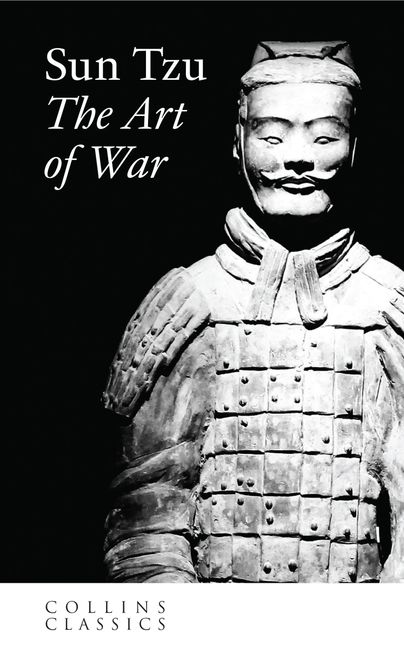
Sun Tzu, renowned Chinese military strategist who lived purportedly sometime between the 6th and 4th centuries B.C., writes in his now famous treatise (the oldest book on military strategy) The Art of War:
“Ultimate excellence lies not in winning every battle but in defeating the enemy without ever fighting. The highest form of warfare is to attack strategy itself”.
This maxim would not please certain current day world leaders and we seem unhappily to be increasingly living in a world where to quote a famous early 19th century Western military strategist Carl Von Clauswitz
“War is the continuation of politics by other means”.
Indeed, war seems now to have become the preferred solution for solving differences between states. International law is a thing of the past, negotiations are only stratagems for buying time or duping the adversary and war mongering politicians talk of obliterating their enemies, blowing countries from the map, destroying their industries and infrastructures, attack cities and towns without any regard for civilians, without any thought or heed for the long term consequences for civilian populations and with terrible consequences in terms of loss of life.
All countries that can are hastily re-arming, spending billions on weapons that could otherwise be spent on health, education, justice, human development, fighting disease and hunger, protecting the environment. As Sun Tzu writes in chapter 12 of his Art of War: “But a nation destroyed cannot be put back together again, a dead man cannot be brought back to life. So an enlightened ruler is prudent, the effective general is cautious”. War for Sun Tzu was a deadly serious business not to be entered into lightly and requiring great prudence and thought.
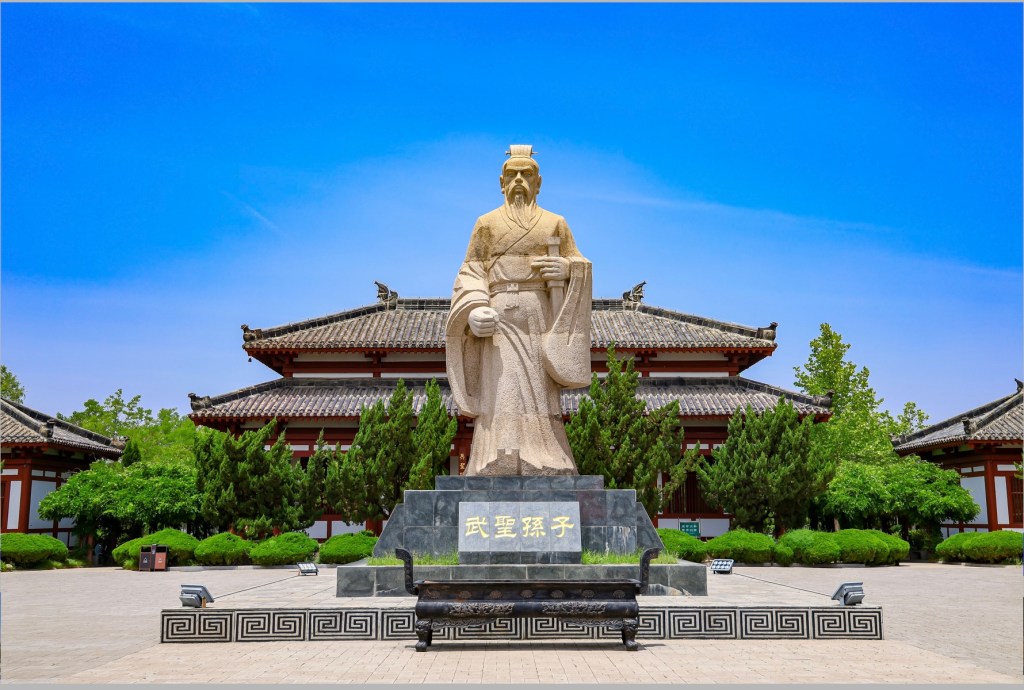
Source Trip.com
So it would seem all the more urgent and necessary today to reread Sun Tzu if only to rediscover how humanity can return to a more strategic way of warfare which invites leaders to think and fight strategically and to resolve strategic problems between states without even ever having to fight.
If Sun Tzu ever existed, his birthplace is said to be in Dongxin district, Guangrao county, Dongying, East China’s Shandong province and there even exists today a cultural centre in his honor, such is his importance in Chinese culture.
He would have been a contemporary of Confucius and it is believed that he was a general from the state of Qi (current day Shandong) who made a gift of his treatise in 512 B.C. to King Helu of the state of Wu (current day Zhejiang). .King Helu applied Sun Tzu’s theories on warfare to invade the state of Chu to the south and took its capital.
The Art of War itself is divided into 13 chapters and each one is dedicated to a different set of skills related to warfare. It’s not really a book in the western sense. It’s more a collection of maxims and aphorisms the meaning of which go way beyond their primary military meaning. Indeed, there is very little mention of combat techniques. Rather, Sun Tzu discusses conditions, terrain, ground, geography, logistics. Why?
Before answering why, below are some of the most strikingly enigmatic maxims in Sun Tzu’s short text:
1: Making Plans
“War is a grave affair of state. It is a place of life and death. A road to survival and extinction. A matter to be pondered carefully“.
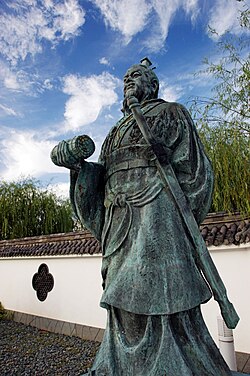
Tottori, Japan. Source http://creativecommons.org
/licenses/
by-sa/3.0/, via Wikimedia Commons
2: Waging of War
“Without a full understanding of the harm caused by war, it is impossible to understand the most profitable way of conducting it”.
3: Strategic Offensive
“The skillful strategist defeats the enemy without doing battle, captures the city without laying siege, overthrows the enemy state without protracted war”.
4: Forms and dispositions
“The victorious army is victorious first and seeks battle later. The defeated army does battle first and seeks victory later”.
5: Potential Energy
“The skillful warrior exploits the potential energy. He does not hold his men responsible”.
6: Empty and full
“Supreme military victory lies in deriving victory from the changing circumstances of the enemy”
7: The Fray
“A whole fighting force can be robbed of its spirit. A general can be robbed of his presence of mind”.
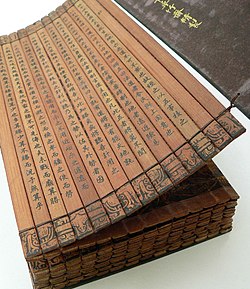
Bamboo book form,
University of Riverside,
https://creativecommons.org
/licenses/by/2.0, via Wikimedia Commons
8: the 9 changes
“There are roads not to take. There are armies not to attack. There are towns not to besiege. There are terrains not to contest. There are ruler’s orders not to obey”.
9: On the march
“Rashly underestimate your enemy and you will surely be taken captive”
10: Forms of Terrain
“He who advances without seeking Fame. Who retreats without escaping Blame. He whose one aim is to protect his people and serve his lord, this man is a jewel of the realm”.
11: The 9 kinds of ground
“Strong and weak. Both can serve thanks to the principle of ground”.
12: Attack by fire
“Never move except for gain. Never deploy except for victory. Never fight except in a crisis”.
13: Espionnage
“Raising an army of a hundred thousand men and marching them three hundred miles drains the pockets of the common people”.
Many of these maxims may seem simple common sense. However, Sun Tzu’s philosophy can only really be grasped in relation to the underlying Chinese culture based on Taoism that emerged during the same period.
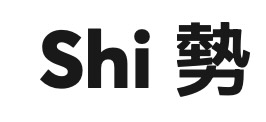
To quote Scott D McDonald (La Conversation, novembre 2025), inspired by Taoism, Sun Tzu invites rulers to use the inherent potential of situations as much as possible before resorting to violent conflict. It is always better “to reduce an adversary’s potential by undermining his plans than by attacking his armies with force”. Täoism considers existence as made up of constant cycles of change during which energy levels increase and decrease. The Tao or Way directs all things towards the achievement of an inherent potential. The Chinese expression for this situational potential is “shi”.
Rather than attack a situation head on or try to modify it by force, it is better to “follow the flow” to allow the potential of the situation to emerge eventually before acting. Taoists talk about “wúwėi” or “non-action” and wait for the potential of the situation to mature. This is why Sun Tzu focuses on “conditions and consequences” and not on “means and ends“. Create the required conditions and the expected consequences will inevitably flow without having to run the risk of going to war.
The Taoist philosopher Mencius recounts the parable of the farmer of Song who pulled on the stalks of his crops to hasten their growth only instead, to destroy his crop. You can’t help wheat to grow faster by pulling on the shoots. Rather, you need to understand the natural potential of the crops and act appropriately as a result: provide sufficient water to help the crops grow, remove weeds, hoe the fields regularly,…Actions are effective when they allow the potential of the situation to develop naturally, not when we try to force or precipitate things. Rulers unlike the farmer of Song must help nature follow its course, not try to force things to grow.
This is why Sun Tzu writes that the ruler’s victories should be flawless because “his victory is inevitable. He vanquishes an already defeated enermy“. he goes to war only when the potential of the situation guarantee total success and not because he wants to impose his will on the situation. His generals aren’t heroes becuase they have done everything to seek victory first and go to battle later.
As Scott McDonald writes “from a taoist point of view, “the rulers who seek to define an effective strategy muts read the situation, discover its potential and position their military forces in order to benefit a maximum from the situation (shì). They act with “wúwéi” to develop rather than force situations because forcing the situation would otherwise disturb the natural order of the universe” (my translation from French).
John Minford editor of the Penguin Classic of The Art of War quotes Arthur Golden who has his geisha say
“We must use whatever methods we can to understand the movements of the universe around us and time our actions so that we are not fighting the currents.but moving with them“.
Sun Tzu expounds the importance of “mischief, cleverness and common sense in human conflict as opposed to brute force”.
To conclude there is certainly a need for us all to do all we can to rein in the growing trend of brute force, gunboat diplomacy, bombing, destroying and brutalization of relations between peoples and countries. Sun Tzu paradoxically in teaching war, points the way if not to peace at least to restraint, prudence, control, patience, transformation rather than revolution. The strategic ruler patiently cultivates his garden, creating the conditions which allow his crops to grow. Skillfully deployed soldiers, Sun Tzu tells us in chapter 5, are like round boulders rolling down a mighty mountainside. The skilled general provides the slope on the moutainside that makes his army unstoppable.
As Sun Tzu says :
Ultimate excellence lies not in winning every battle but in defeating the enemy without even fighting.
Read Sun Tzu and discover the Way to winning without having to fight!
Bibliography/References
- The Art of War. Sun Tzu Penguin Classics
- L’art de la guerre de Sun Tzu ou comment vaincre en évitant le combat, Scott D. McDonald, 20 Novembre, 2025, La Conversation,
- L’Art de la Guerre expliqué à l’Occident par François Jullien 2007 (youtube)
- François Julien La Propension des choses, Pour une histoire de l’efficacité en Chine, 1992.
- Philosophie Magazine 23 septembre 2018
 OneWorld - Joseph Noone's Blog